


Watch Care 101: How to Make Your Watch Last Longe

Good watch care tips come down to four habits: keep it dry when the strap or movement is not rated for water, clean it with a soft dry or slightly damp cloth rather than harsh chemicals, store it away from direct heat and humidity, and get an automatic or mechanical movement serviced every few years. Follow those four consistently and most genuine watches, whether a Rs. 5,000 quartz or a Rs. 100,000 automatic, will comfortably outlast their warranty period. This guide breaks each of these down properly, and points to genuinely low maintenance options in our Men's Watches collection if upkeep is a bigger factor in your next purchase than it should be.
Table of Contents
- Watch Care Tips: The Quick Checklist
- How to Clean a Watch, and What to Clean It With
- How to Store a Watch When You're Not Wearing It
- How to Protect Your Watch From Everyday Damage
- Watch Maintenance Tips for Leather Strap Watches
- Watch Maintenance Tips for Steel and Resin Watches
- Automatic Watch Care Tips
- How Many Years Should a Watch Last
- What Is the 3 Watch Rule
- Where to Buy Watches Built to Last
- Related Categories
- FAQs
Watch Care Tips: The Quick Checklist
Before the detail, here is the short version.
- Wipe the case and band after wearing it, especially after sweating or exposure to rain.
- Respect the actual water resistance rating, a WR30M or WR50M watch is not safe for swimming even though the number sounds reassuring.
- Keep it away from direct heat, a car dashboard in summer or a radiator can warp seals and fade dials.
- Store it flat or upright, not tossed loose in a drawer with keys or coins that can scratch the crystal.
- Service an automatic or mechanical movement every 3 to 5 years, quartz movements just need a battery change when they stop.
How to Clean a Watch, and What to Clean It With
How to clean a watch depends mainly on the case and band material, but the safe default across almost every type is the same.
What should I clean my watch with? A soft, lint free cloth, slightly dampened with plain water, is enough for most day to day cleaning. For a stainless steel case and bracelet specifically, a small amount of mild soap on a soft toothbrush, gently worked into the links, removes built up grime without damaging the finish, followed by a dry wipe. Avoid alcohol based cleaners, ammonia, or anything abrasive, these can strip the finish on a plated case or dull a mineral crystal over time. If the watch is not rated for water resistance at all, keep it away from running water entirely and stick to a dry cloth only.
How to Store a Watch When You're Not Wearing It
Storage matters more than most owners realise, particularly for anything with a leather band or an automatic movement.
- Keep it somewhere with stable temperature and humidity, a bedroom drawer is fine, a bathroom cabinet is not, the moisture speeds up leather cracking and can fog a crystal over time.
- Avoid direct sunlight for extended periods, UV exposure fades dial colour and can dry out leather bands faster than normal wear would.
- Store leather strap and mechanical watches upright or on a flat cushion rather than piled with other items, this prevents pressure marks on the band and protects delicate hands and crystals.
- If you own an automatic watch you wear only occasionally, a watch winder keeps it running between wears, though this is optional, most owners simply reset the time when they pick it back up.
How to Protect Your Watch From Everyday Damage
How to protect your watch is mostly about avoiding a handful of predictable risks rather than babying it constantly.
- Take it off before contact sports, heavy manual work, or anything involving repeated hard impacts, unless it is specifically built for that, like a G-Shock or a Casio Protrek outdoor sensor watch.
- Avoid magnetic fields where possible, speakers, magnetic phone mounts, and some bag clasps can affect a mechanical movement's accuracy over time, something to keep in mind with any watch from our Citizen automatic collection.
- Rinse salt water or chlorine off a water resistant watch promptly, both degrade case seals faster than plain water, even on a WR100M Edifice chronograph.
- Get the crystal checked if it develops a hairline scratch, left alone it can deepen and eventually affect visibility or even crack under a knock.
Watch Maintenance Tips for Leather Strap Watches
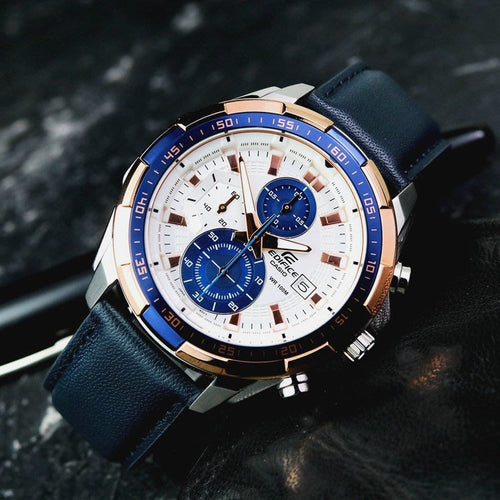
Leather needs the most active care of any common strap material. A light leather conditioner applied every few months keeps the band from drying out and cracking, particularly in hot or dry climates. Avoid soaking a leather band in water, even briefly, since it can warp and discolour permanently. If you wear a leather strap watch daily, such as the Casio Edifice EFR-539L-7C pictured above, expect to replace the band every one to three years regardless of how well you maintain it, that is normal wear for the material rather than a sign of poor quality. If low maintenance matters more to you going forward, our leather strap watches collection and leather strap watches for women still have genuine leather options, but a full steel band from our Citizen collection or Casio collection will always outlast leather with less upkeep.
Watch Maintenance Tips for Steel and Resin Watches
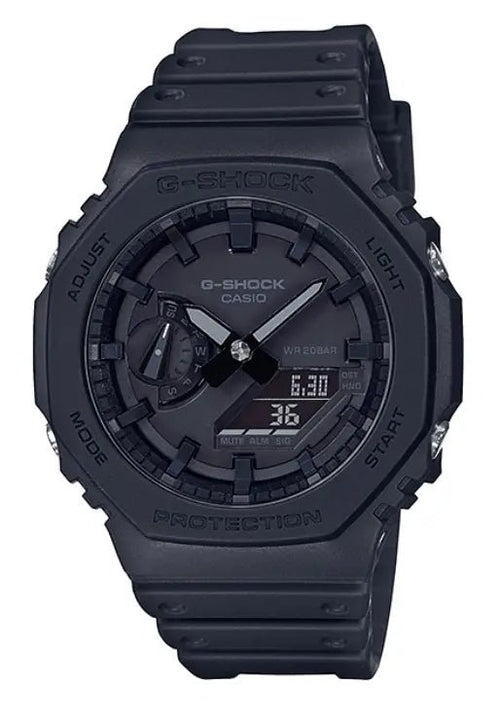
Stainless steel and resin are the two lowest maintenance materials you can choose. A steel bracelet, like those on most Casio Enticer models or the Citizen collection, just needs an occasional soapy wipe to stay looking new, and it resists scratches and daily wear far better than leather or plated finishes. Resin straps, the kind used across the G-Shock collection including the GA-2100-1A1DR pictured above, need essentially no maintenance beyond a rinse, they do not absorb sweat or degrade from water exposure the way leather does. If minimal upkeep is genuinely the priority, choosing steel or resin from our Casio Edifice collection or G-Shock lineup over leather from the start solves most of the maintenance question before it becomes one.
Automatic Watch Care Tips
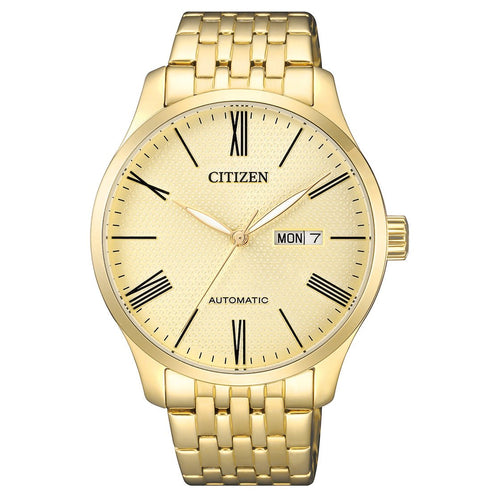
Automatic watch care tips differ from quartz care in one major way: the mechanical movement inside, like the one in the Citizen NH8352-53P pictured above, needs periodic professional servicing, not just surface cleaning.
- Wear it regularly if possible, the automatic movement winds itself from wrist motion, and long periods of inactivity can let lubricants inside settle unevenly.
- Avoid setting the date between roughly 9pm and 3am on most automatic movements, the date change mechanism is mid cycle during those hours and forcing it can damage the gears.
- Do not shake an automatic watch hard to wind it, gentle wrist motion or a winder is the correct way to keep it running.
- Have it serviced by a professional watchmaker every 3 to 5 years, this is where internal oiling actually happens, not something an owner should attempt at home.
How Many Years Should a Watch Last
How many years should a watch last depends heavily on the movement type and how well it is cared for. A genuine quartz watch, with nothing more than periodic battery changes and basic cleaning, can easily run for 10 to 20 years or longer, the movement itself rarely wears out under normal use. An automatic or mechanical watch, properly serviced every few years, can last several decades and is often passed down as a family piece, since the mechanical components can be repaired and replaced individually rather than needing full replacement. A cheap, unbranded fashion watch with no real quality control behind it may only last a year or two before the movement fails or the band gives out, which is exactly why buying from a brand with genuine warranty support matters more than it might seem at the time of purchase.
What Is the 3 Watch Rule
What is the 3 watch rule is a popular idea in watch collecting circles, not a formal rule so much as a practical guideline: you can cover almost every situation in life with three watches rather than a large collection. Typically that means one dress watch for formal occasions and office wear, one everyday sport or tool watch for daily use, and one genuinely rugged or water resistant watch for active situations like swimming, diving, or outdoor work. It is a useful mental model if you are trying to decide what to buy next rather than accumulating watches without a clear purpose behind each one.
Where to Buy Watches Built to Last
If durability and long term reliability matter more to you than trend driven design, stick to brands with a track record of genuine parts and service support. Our Casio collection, Citizen collection, and Casio G-Shock collection all list genuine stock with 1 year international warranty, cash on delivery, and a 7 day return policy, so you are buying from a retailer that stands behind the product rather than an unverified listing.
Related Categories
Looking for a specific type of low maintenance or long lasting watch? These collections are worth a look too:
- Casio G-Shock collection, for genuinely low maintenance resin builds
- Casio Protrek collection, for outdoor sensor watches built for rough use
- Citizen automatic watches, if a mechanical movement is what you are maintaining
- Citizen Eco-Drive watches, for a low maintenance solar alternative to a battery change
- Leather strap watches for men, if you prefer leather despite the extra upkeep
- Leather strap watches for women, for the women's leather lineup
- Casio Edifice collection, for steel chronographs with genuine WR100M water resistance
- Chronograph watches, for watches with extra moving parts worth understanding before you buy
- All Men's Watches, for the full range across every material and movement type
- All Women's Watches, for the complete women's catalog
FAQs
How do I properly maintain my watch?
Wipe it down after wearing it, respect its actual water resistance rating, store it away from heat and humidity, and if it is automatic or mechanical, get it professionally serviced every 3 to 5 years rather than only cleaning the outside.
What is the 3 watch rule?
It is a guideline suggesting three watches cover most situations, a dress watch for formal wear, a daily sport or tool watch, and a rugged or water resistant piece for active use, rather than needing a large collection.
How do I oil my watch?
You should not attempt this yourself. Oiling is part of professional movement servicing, done by a qualified watchmaker who disassembles the movement, cleans it, and applies the correct lubricants to specific components, typically every 3 to 5 years for automatic and mechanical watches. Quartz movements do not need oiling.
How many years should a watch last?
A well maintained quartz watch can last 10 to 20 years or more with just battery changes. A properly serviced automatic or mechanical watch can last several decades. A cheap unbranded watch may only last a year or two, which is why genuine branded stock with real warranty support tends to hold up better long term.